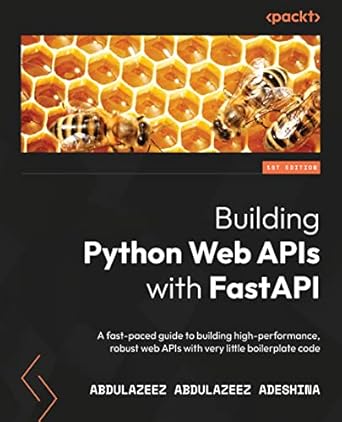
When I decided to learn backend development with Python, I kept hearing one name repeatedly: FastAPI.
People described it as fast, modern, and developer-friendly.
What I didn’t expect was how quickly I could go from zero to a working, documented API—with almost no boilerplate.
This post walks through how I started with FastAPI, why it felt easy, and a practical code example that shows its biggest strength: automatic Swagger documentation.
Why I Chose FastAPI
I wanted a framework that:
- Uses modern Python
- Enforces good practices by default
- Makes APIs self-documented
- Doesn’t hide what’s happening under the hood
FastAPI checked all those boxes.
The biggest surprise?
Swagger comes built-in and works automatically.
Step 1: Installing FastAPI
Setup was straightforward:
pip install fastapi uvicorn
fastapi→ the frameworkuvicorn→ the ASGI server
No plugins. No configuration files.
Step 2: My First FastAPI App
Here’s the first working API I wrote:
from fastapi import FastAPI

app = FastAPI()

@app.get("/")
def root():
    return {"message": "Hello FastAPI"}
Run it using:
uvicorn main:app --reload
At this point, two things work immediately:
- API endpoint:
http://127.0.0.1:8000/ - Swagger UI (this is the magic):
http://127.0.0.1:8000/docs
I hadn’t written a single line of documentation—yet Swagger was already there.
Step 3: Seeing Swagger in Action
Opening /docs shows:
- All endpoints
- HTTP methods
- Parameters
- Request/response schemas
- A “Try it out” button
This changes how you build APIs.
Instead of guessing or using Postman blindly, Swagger becomes your development companion.
Step 4: Adding Real Inputs (Path & Query Parameters)
@app.get("/items/{item_id}")
def get_item(item_id: int, q: str | None = None):
    return {
        "item_id": item_id,
        "query": q
    }
What FastAPI does automatically:
- Validates
item_idis an integer - Rejects invalid input with clear errors
- Updates Swagger UI instantly
No manual validation logic needed.
Step 5: Request Bodies with Validation
FastAPI uses Pydantic models for data validation.
from pydantic import BaseModel

class BlogPost(BaseModel):
    title: str
    content: str
    published: bool = True

@app.post("/posts")
def create_post(post: BlogPost):
    return post
In Swagger:
- Input fields appear automatically
- Required vs optional fields are clear
- Types are enforced
- Errors are descriptive
This is where FastAPI really feels easy but powerful.
Step 6: Status Codes and Clean APIs
from fastapi import status

@app.post("/posts", status_code=status.HTTP_201_CREATED)
def create_post(post: BlogPost):
    return post
Swagger now documents:
201 Createdinstead of default200- Clear API behavior for consumers
Step 7: Authentication with Swagger (JWT Example)
When I added JWT authentication later, Swagger adapted automatically:
- “Authorize” button appeared
- Bearer token support worked out of the box
- Protected routes showed a lock icon 🔒
This meant:
I could test secure APIs without leaving the browser.
Why FastAPI Felt Easy (But Not Shallow)
FastAPI feels easy because:
- It leverages Python type hints
- It enforces good defaults
- It eliminates repetitive code
- It gives instant feedback via Swagger
But it’s not simplistic:
- Async support
- Dependency injection
- Security utilities
- Production-ready performance
Who FastAPI Is Perfect For
FastAPI is ideal if you are:
- Learning backend development
- Building REST APIs
- Creating microservices
- Serving ML models
- Tired of undocumented APIs
Final Thoughts
What impressed me most wasn’t just speed—it was clarity.
FastAPI makes you write clean, explicit code, and in return, it gives you:
- Validation
- Documentation
- Performance
- Confidence
If you are starting backend development with Python today, FastAPI is one of the best places to begin.