
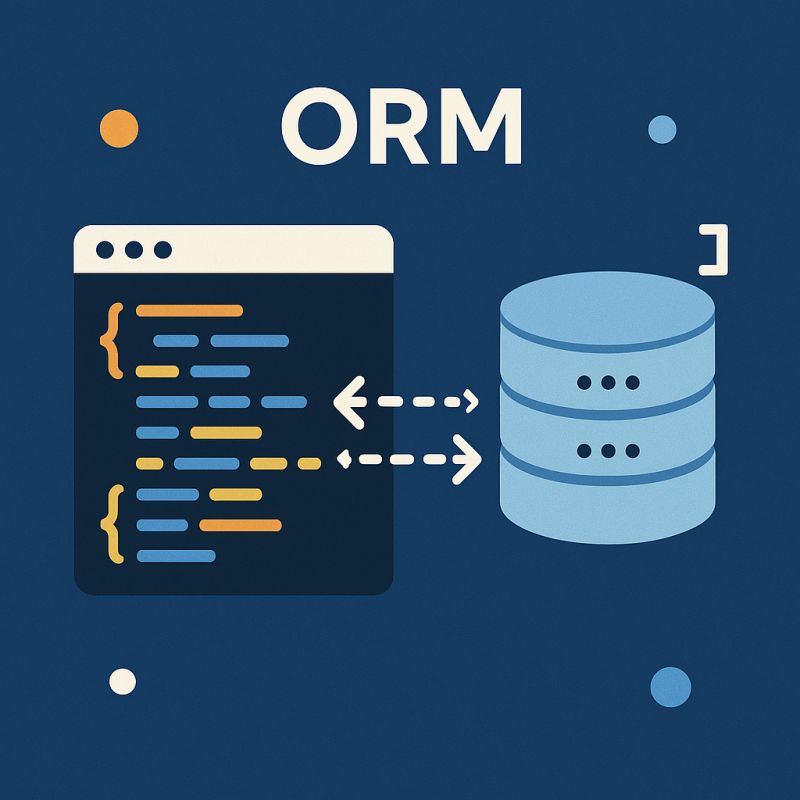
ORM stands for Object-Relational Mapping. It allows developers to interact with databases using their programming language of choice instead of writing raw SQL queries. With ORM, you can create, read, update, and delete data using objects, classes, and methods — making your code more intuitive and maintainable.
Writing raw SQL within code can be cumbersome, error-prone, and hard to maintain.
ORM simplifies data operations by abstracting the SQL layer, offering a cleaner and more readable syntax.
It reduces boilerplate and enables developers to work with databases in a more object-oriented way.
Android: Room — A robust ORM from Google that makes it easier to work with SQLite.
.NET: Entity Framework — A powerful ORM that lets you interact with your database using LINQ and C#.
iOS: Core Data — Apple’s framework for managing the model layer in iOS apps with built-in ORM support.
Tips
Whenever you’re building an app that requires database interaction, consider using the ORM library specific to your platform. It saves time, improves code readability, and reduces the risk of SQL-related