Every year, developers debate which programming language is “the best.”
And every year, the conversation goes in circles—lists, rankings, arguments, counterarguments.
By 2026, one thing is clear: there is no single best programming language.
What exists instead is a fragmented but stable landscape where different languages dominate different kinds of work, driven by economics, infrastructure, security, and institutional constraints. Understanding this landscape requires stepping away from popularity charts and looking at how software is actually built, maintained, and paid for.
Python: Where the Money Is
Python’s influence in 2026 comes from one source: AI and data.
It is the language most teams reach for when they need to explore ideas quickly, train models, analyze large datasets, or automate internal processes. Python often sits at the center of systems that generate enormous business value—even when the underlying performance work happens elsewhere.
Developers often describe Python as the place where everything begins:
- Prototypes
- Experiments
- Research
- Early production systems
But they are equally honest about its limits. When systems grow large, performance-critical, or infrastructure-heavy, Python frequently hands off responsibility to other languages.
Python’s strength is economic impact, not structural dominance.

JavaScript: The Language You Don’t Get to Avoid
JavaScript’s role in 2026 is defined by inevitability.
If software runs in a browser, JavaScript is involved. That reality has not changed, and no credible alternative has emerged. TypeScript has improved the experience and reduced risk, but it has not altered the fundamental dependency.
What makes JavaScript unusual is that it is rarely chosen for strategic reasons. Teams adopt it because they must, not because they want to. As a result, most innovation happens in frameworks and tooling around it, rather than in the language itself.
JavaScript is not a competitive advantage.
It is the cost of entry to the web.

Go: The Language Behind the Cloud
Go has quietly become one of the most influential languages of the decade—not by dominating headlines, but by powering the systems everyone else depends on.
Modern cloud platforms, orchestration tools, and infrastructure services lean heavily on Go. Teams value it for reasons that have little to do with elegance and everything to do with reliability:
- Predictable performance
- Simple concurrency
- Fast builds
- Easy onboarding
Go tends to replace complexity rather than add it. In many organizations, it displaces Java in backend services and Python in operational tooling.
Its influence comes from alignment with how modern systems are deployed and operated.

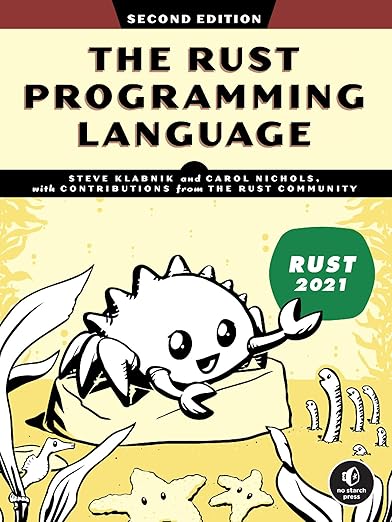
Rust: The Long Game
Rust’s growth is slower and more deliberate than most languages—but also more durable.
Rust shows up where failure is expensive:
- Infrastructure
- Security-sensitive systems
- Low-level components
- Long-lived software
Its appeal is not speed of development, but correctness. By eliminating entire classes of memory errors, Rust reduces risks that no amount of testing can fully remove in older languages.
Teams that adopt Rust usually do so after careful consideration, and they rarely go back. The learning curve is real, but so is the payoff.
Rust represents a shift toward software that is designed to be trusted over decades, not just shipped quickly.
Java: Still Everywhere, Just Not Expanding
Java continues to run a large portion of the world’s software. Financial systems, government platforms, and enterprise backends still depend on it heavily.
What has changed is momentum.
Most new systems are no longer choosing Java as a first option unless they must integrate with existing Java infrastructure. Its relevance comes from scale and stability, not growth.
Java remains important, but primarily as a language of maintenance and continuity rather than expansion.
How the Pieces Fit Together
By 2026, the landscape looks less like a competition and more like a division of labor:
- Python drives experimentation and AI-driven value
- JavaScript enables access and distribution
- Go holds cloud infrastructure together
- Rust protects systems where failure is unacceptable
- Java sustains large, established platforms
Teams that succeed are not those that standardize on one language, but those that use each language where it fits best.
A More Useful Way to Think About “Best”
The most productive question is no longer “Which language should I learn?”
It is “What kind of problems do I want to solve?”
Languages are tools shaped by constraints:
- Performance
- Security
- Scale
- Regulation
- Time-to-market
Understanding those constraints matters far more than chasing rankings.
In 2026, expertise is not defined by loyalty to a language, but by the ability to choose the right one—and know its limits.